

How to Use a Disposable Camera (Without Wasting a Shot)
Disposable cameras are having a real moment, and honestly? We get it. There's something about not being able to check the shot, not being able to delete it, and waiting to see what you got. They have a grain and a softness that no phone filter has ever quite copied.
They're also a little bit unforgiving. A disposable camera won't warn you that your thumb is over the lens or that the room is too dark — you find out weeks later, when the scans land in your inbox.
So here are eight things worth knowing before you shoot your next one. None of this is complicated, and none of it requires knowing anything about photography. Most disposable cameras work the same way — Kodak and Fujifilm are the two you'll usually find on a shelf — so this applies to just about any camera you pick up.
1. Keep your finger off the lens

This is the most common one, and it catches everybody at least once.
On a disposable camera, the viewfinder you look through and the lens that actually takes the picture are two different windows. So when your finger drifts over the lens, you won't see it. Everything looks perfect right up until the photo comes back with a soft pink blur across half the frame.
Before each shot, take half a second to check where your fingers are. That's the whole trick.
2. When should you use the flash?

Short answer: more often than you think.
Skipping the flash is the single most common mistake we see. Indoors, at night, in a restaurant, in the shade — turn it on. With film, it's almost always better to give it too much light than not enough.
Here's why that matters: we can pull a lot of detail out of a photo that got too much light. A photo that didn't get enough light doesn't have the detail there in the first place, and no lab can invent it. Underexposed shots come back dark and heavily grainy.
When in doubt, flash.
3. How to tell when the flash is ready

The flash needs a few seconds to charge before every shot, and if you fire before it's ready, you get nothing.
Press and hold the button with the lightning symbol — on some models you slide it up instead. You'll hear a faint high-pitched whine as it charges. After about five seconds, a small light on top of the camera comes on. That's your green light.
Wait for it. Firing early is one of the most common reasons a night shot comes back black.
4. Mirror selfies: skip the flash
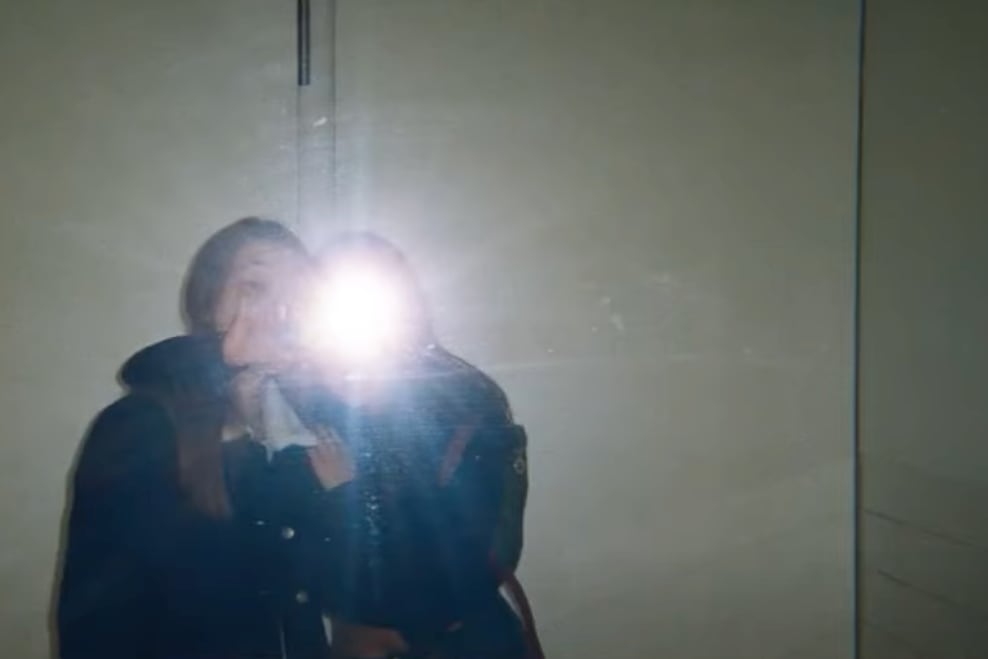
The flash bounces straight off the mirror and back into the lens, and your pose comes back as a wall of white glare with everything around it blown out.
Instead, bring as much light into the room as you can — turn on every lamp, open the blinds, shoot during the day if you can. Then take the shot without the flash. You'll get something much closer to what you actually saw.
5. How to advance the film
After every shot, turn the little wheel on the top right with your thumb until it stops moving. That pulls the next frame into place. The shutter physically won't fire until you do.
It's worth getting into the habit of advancing right after you shoot, rather than right before the next one. That way the camera is always ready when something happens in front of you — and something always happens right when you're not ready.
One small trade-off: a wound-on camera can fire by accident if it gets knocked around in a bag. If you're rough with your stuff, you might prefer to wind just before you shoot and accept the half-second delay.
6. How close should you stand?

Disposable cameras have a fixed lens — no zoom, no focus ring. The camera is sharp at a certain distance and that's that, so you do the focusing by moving your feet.
The sweet spot is roughly 4 to 15 feet. Closer than that and your subject goes soft. Much further and they turn into a small shape in a big frame.
This matters even more at night. The flash on a disposable is small, and its light falls off fast — past about 10 or 15 feet it simply doesn't reach. That group shot across the room is the classic disappointment. Get closer than feels necessary.
7. How many pictures does a disposable camera take?
Most disposable cameras come with 27 exposures, though you'll also see 24 and 39 depending on the brand. "Exposures" just means shots — 27 exposures, 27 pictures.
To check how many you have left, look at the small dial on top of the camera, next to the shutter button. The number showing is your remaining frames, counting down.
A tip from having developed a lot of these: it's normal to get one or two extra frames at the end, and it's also normal for the very first and very last shot to come out a little odd. Don't save your most important photo for frame 27.
8. Where to get your disposable camera developed
You've got a camera full of pictures you can't see yet, and no way to know if they came out. Where you take it next genuinely matters.
A quick word on drugstores. Most pharmacy counters don't develop film on site anymore — they mail it out to a central facility, which is why it takes two or three weeks. Your film travels further, passes through more hands, and gets processed in a high-volume run where nobody is looking at your particular roll. Sometimes it's fine. Sometimes it isn't, and by then the negatives are gone.
Here's what a dedicated lab does differently, and why it shows up in your photos:
- Fresh chemistry. Developing chemicals wear out. Tired chemistry means weak, shifted color — and it's the single biggest difference between a good scan and a disappointing one.
- A person looking at your scans. This is the part most people don't know: a film scan isn't automatic. Unlike your phone, a disposable camera doesn't correct color or exposure for you. Someone at the lab makes those calls, frame by frame. That judgment is the product.
- Your negatives handled carefully. They're the original. You only get one.
That's what we do here at Legacy Film Lab. You can drop your camera off or mail it in — no need to open it or unload anything, just send us the whole camera. We develop it, scan it, and send you a download link. Developing and scanning a disposable is $17.99, the same as any other roll.
If your camera reaches us before 1PM Pacific, we'll have your scans back to you the same day. Not two weeks. That afternoon.
Once we've taken the film out, we recycle the camera body rather than sending it to landfill. You get the photos; the plastic gets another life.
First time sending film anywhere? Here's exactly how it works, step by step. No question is too basic, and we mean that.
Common questions about disposable cameras
How many pictures does a disposable camera take?
Usually 27, sometimes 24 or 39 depending on the brand. Check the dial on top of the camera to see how many you have left.
Do you have to use the flash?
Not always — outdoors in daylight you're fine without it. Anywhere else, use it. Too much light is a much smaller problem than too little.
Do disposable cameras need batteries?
There's a small battery inside that powers the flash, and it's already in there. You never need to add or change anything.
Do I need to take the film out before sending it in?
No — please don't. Opening the camera exposes the film to light and can ruin your photos. Send us the whole camera exactly as it is.
Can I get digital copies?
Yes. Scans are how most people get their photos back — we email you a download link. You can add prints too.
How much does it cost to develop a disposable camera?
With us it's $17.99 for developing plus standard scans — the same as any other roll. No surcharge for the camera being a disposable.
What happens to the camera afterwards?
We take the film out and recycle the body. If you'd like it back for any reason, just ask when you send it in.
How long does developing take?
With us, same day if your camera arrives before 1PM Pacific. Anything later goes out the next processing day.
Do they still make disposable cameras?
They do. Kodak and Fujifilm both still produce them, and they're easier to find now than they were a few years ago.
That's it
Keep your finger clear, use the flash more than feels natural, stand closer than you think you should, and get it developed somewhere that treats your roll like it matters.
The rest is just shooting — which is the fun part, and the part where the not-knowing turns into something worth waiting for.
Send us your disposable camera whenever you're ready. We've got your back.